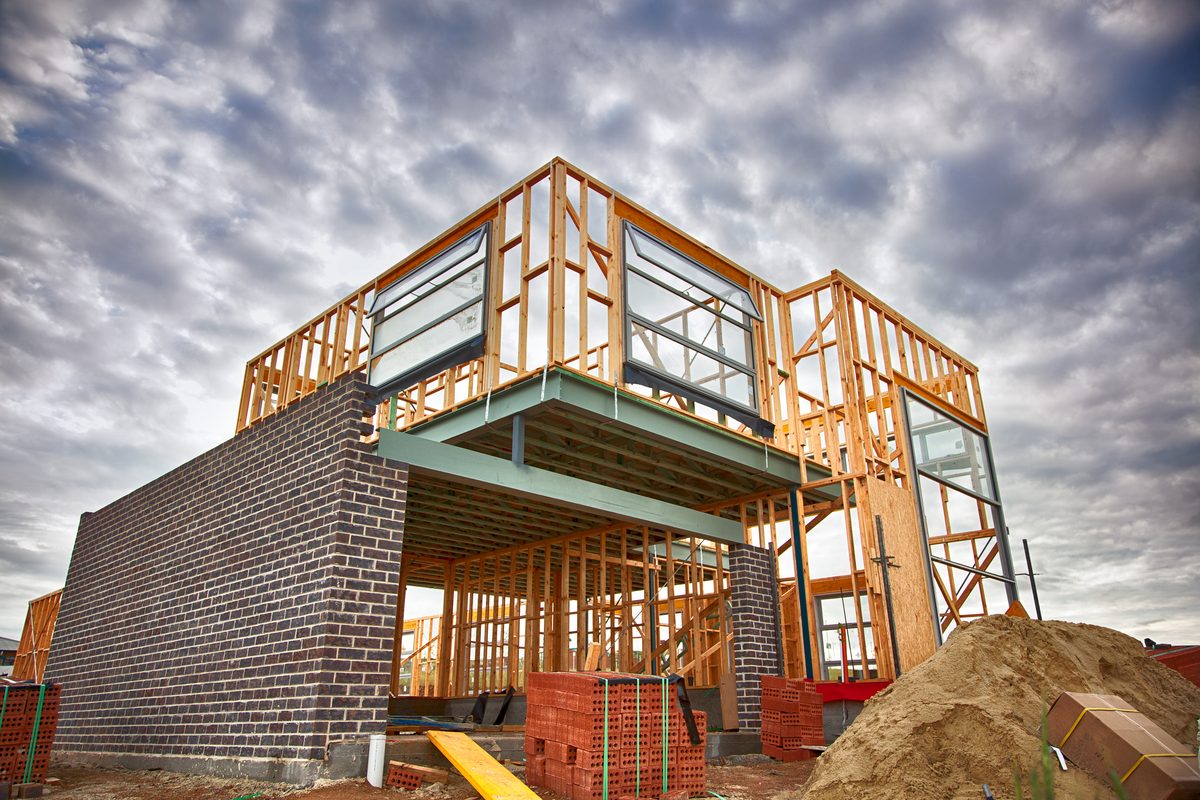
If you are reading this, you are probably sitting on a block of land in Sydney with an ageing house that no longer suits your needs — and you are trying to work out whether a knock down rebuild is financially viable. You are in the right place.
The short answer: a knock down rebuild in Sydney typically costs between $350,000 and $850,000+, all-in. But that range is so wide it is almost useless without context. The real answer depends on your land, your design, your finishes, and where you are building. Below, we break down every cost component so you can budget with confidence.
What Is a Knock Down Rebuild?
A knock down rebuild (KDR) means exactly what it sounds like: you demolish the existing dwelling on your land and build a brand-new home in its place. It is an increasingly popular choice in Sydney's established suburbs — Fairfield, Bankstown, Parramatta, the Inner West, the Hills District — where vacant land is scarce but the existing housing stock is dated, inefficient, or simply the wrong layout for modern family life.
Unlike a renovation — where you are constrained by the existing footprint, slab, and structure — a KDR gives you a completely blank slate. You get a home designed for how you actually live, built to current energy standards, with none of the compromises that come with working around old walls.
A major renovation in Sydney often lands between $250,000 and $500,000 — and you are still living with someone else's floor plan. A KDR starts around $350,000 and you get exactly what you want, built to 2026 standards. For many homeowners, the gap is smaller than they think — and the long-term value is significantly higher.
Knock Down Rebuild Cost Breakdown (2026)
Here is where your money goes on a typical single-storey, 180–220m² custom home in Greater Sydney. Use this as a budgeting framework — every project is different, but the proportions hold true.
| Cost Component | What It Covers | Typical Range |
|---|---|---|
| Demolition | Demolish existing dwelling, remove debris, clear site | $25,000 – $55,000 |
| Site works & excavation | Cut and fill, retaining walls, site levelling, access | $15,000 – $60,000 |
| Slab & foundations | Engineered concrete slab, piers if required | $40,000 – $80,000 |
| Base build (lock-up) | Frame, brickwork/cladding, roof, windows, doors | $180,000 – $350,000 |
| Internal fit-out | Plasterboard, joinery, flooring, tiling, painting | $100,000 – $220,000 |
| Services (rough-in & fit-off) | Electrical, plumbing, HVAC, data, security | $45,000 – $90,000 |
| Kitchen | Custom cabinetry, stone benchtops, appliances | $35,000 – $80,000 |
| Bathrooms (x2) | Waterproofing, tiling, fixtures, vanities, screens | $40,000 – $80,000 |
| External works | Driveway, landscaping, fencing, clothesline, letterbox | $25,000 – $70,000 |
| Approvals & consultants | DA or CDC, engineering, certification, surveys | $15,000 – $35,000 |
| Contingency | Unforeseen conditions, client variations, upgrades | 10–15% of build cost |
Realistic all-in range for a quality custom home: $380,000 – $700,000. Add a second storey and you are looking at $550,000 – $950,000+. Luxury finishes, complex sites, or architect-designed homes push the upper end higher.
What Actually Drives the Cost?
1. Your Land — Especially the Slope
A flat block in Fairfield is a very different proposition from a sloping block on the North Shore. Steep sites require cut-and-fill, retaining walls, deeper piers, and sometimes specialised engineering — easily adding $30,000 to $80,000 before a single brick is laid. If your block has a significant fall, budget accordingly.
2. Single Storey vs Double Storey
A double-storey home gives you more floor space on a smaller footprint — but it costs more per square metre. Expect to pay roughly $2,200–$3,800/m² for a single-storey build and $2,800–$5,000/m² for a double-storey build, depending on the specification level.
3. Finishes — Where Most Budgets Blow Out
The difference between "standard" and "premium" finishes is the single biggest variable inside your control. Here is what that looks like in practice:
- Kitchen benchtops: Laminate ($2,000) vs engineered stone ($5,000) vs natural marble ($12,000+)
- Flooring: Standard tiles ($40/m²) vs engineered timber ($100/m²) vs herringbone oak ($180/m²+)
- Tapware & fixtures: Bunnings-grade vs Phoenix vs Astra Walker — the gap is thousands per bathroom
- Joinery: Flat-pack vs custom cabinetry — custom costs 2-3× more but lasts 3-4× longer
- Windows: Standard aluminium vs thermally broken aluminium vs timber — price doubles or triples
A good builder will walk you through these trade-offs early so you can prioritise what matters to you and save on what does not. We cover this in our design and planning stage.
4. Council and Approval Pathway
In Sydney, most knock down rebuilds go through one of two paths: a Complying Development Certificate (CDC) or a full Development Application (DA). A CDC is faster (often 2–6 weeks) and cheaper — but your design must meet strict criteria for height, setbacks, and site coverage. A DA gives you more design freedom but takes longer (3–12 months) and costs more in consultant fees. Some councils — looking at you, Inner West and certain North Shore LGAs — are notoriously slow. Budget $3,000–$8,000 for a private certifier on a CDC, or $8,000–$25,000+ for a full DA with all consultant reports.
5. Temporary Accommodation
This is the cost most people forget. You cannot live on-site during demolition and construction. Depending on your timeline (typically 8–14 months for a custom build), renting elsewhere in Sydney will set you back $25,000–$55,000. If you can stay with family, you save that. If you cannot, include it in your budget from day one.
What About Project Home Builders?
You have probably seen ads from volume builders advertising knock down rebuilds "from $250,000" or even lower. Those prices are real — but they are base prices for a standard design on a perfectly flat block with no upgrades. By the time you add site works for a real Sydney block, upgrade from the "standard range" to something you would actually want to live with, and account for council requirements, that $250,000 figure can easily become $400,000+. And you are still living in a home designed for a generic block, not yours.
With a custom builder, the price you discuss early on is much closer to what you will actually pay — because the design is being developed for your specific site from the start. There are no "upgrades" because everything is specified to your brief from day one.
Temporary fencing and site amenities ($5,000–$8,000) · Service connections and disconnections ($3,000–$8,000) · Landscaping beyond basic turf ($15,000+) · BASIX and energy compliance upgrades ($3,000–$8,000) · Asbestos removal if present in existing dwelling ($5,000–$20,000+) · Tree protection and arborist reports ($2,000–$6,000)
How to Budget for a Knock Down Rebuild
- Get a realistic site assessment first. Before you spend money on designs, have a builder walk your site and flag the issues that will drive cost — slope, access, trees, easements, drainage. A good builder does this as part of the initial consultation at no charge.
- Design to your budget, not the other way around. Tell your builder your budget upfront. A responsible builder will design within it — not show you something beautiful that costs $200,000 more than you have.
- Allow 15% for contingency. Even on the best-run projects, things come up — unexpected rock during excavation, a council condition you did not anticipate, a material you fall in love with at the selection appointment. If you do not spend it, great. If you do, it is not a crisis.
- Get a fixed-price contract with a detailed scope. Avoid cost-plus contracts unless you have a very high tolerance for financial uncertainty. A detailed fixed-price contract from a reputable builder tells you exactly what you are getting and exactly what it costs.
- Factor in holding costs. Rent, loan repayments on the land, insurance during construction — these run regardless of whether the build is on schedule. Budget for them separately from the build cost.
Is a Knock Down Rebuild Worth It?
For most Sydney homeowners on a decent block in an established suburb, yes. You are already sitting on the most valuable part of the equation — the land. A KDR lets you unlock that value without stamp duty on a new purchase, without agent fees, and without the compromises of buying someone else's home. You stay in the suburb you know, near the schools and amenities you chose, in a home built for the way you actually live.
Financially, a well-executed KDR in a solid Sydney suburb typically adds 20–40% more value than it costs — meaning you are building equity, not just spending money. That equation works even better if you are building a duplex or a home with a granny flat for rental income.
Next Steps
If you are serious about a knock down rebuild, the next step is simple: get a builder to look at your site. Not a salesperson — an actual builder who can tell you what is achievable and what it will really cost. A good consultation should leave you more informed than when you arrived, even if you decide not to proceed.
At Kadmia Constructions, we have been doing exactly that for over a decade across Greater Sydney — Western Sydney, the Inner West, North Shore, Eastern Suburbs, Sutherland Shire, and the Hills District. If you would like a free, no-obligation site assessment and consultation, we would be happy to walk your block with you and talk through the numbers.